
Working tool
Facility assessment media plan
Capture enough context to locate a condition, then identify what requires closer access or qualified review.
- 01
Open with building and site context rather than an isolated detail.
- 02
Identify the roof area, elevation, room, or system visible in each view.
- 03
Separate visible observations from diagnosis and authorized repair.
- 04
Record areas that could not be accessed or confirmed.
- 05
Connect follow-up photographs, measurements, or trade review to the open condition.
- 06
End with the decisions needed to prepare the next scope.
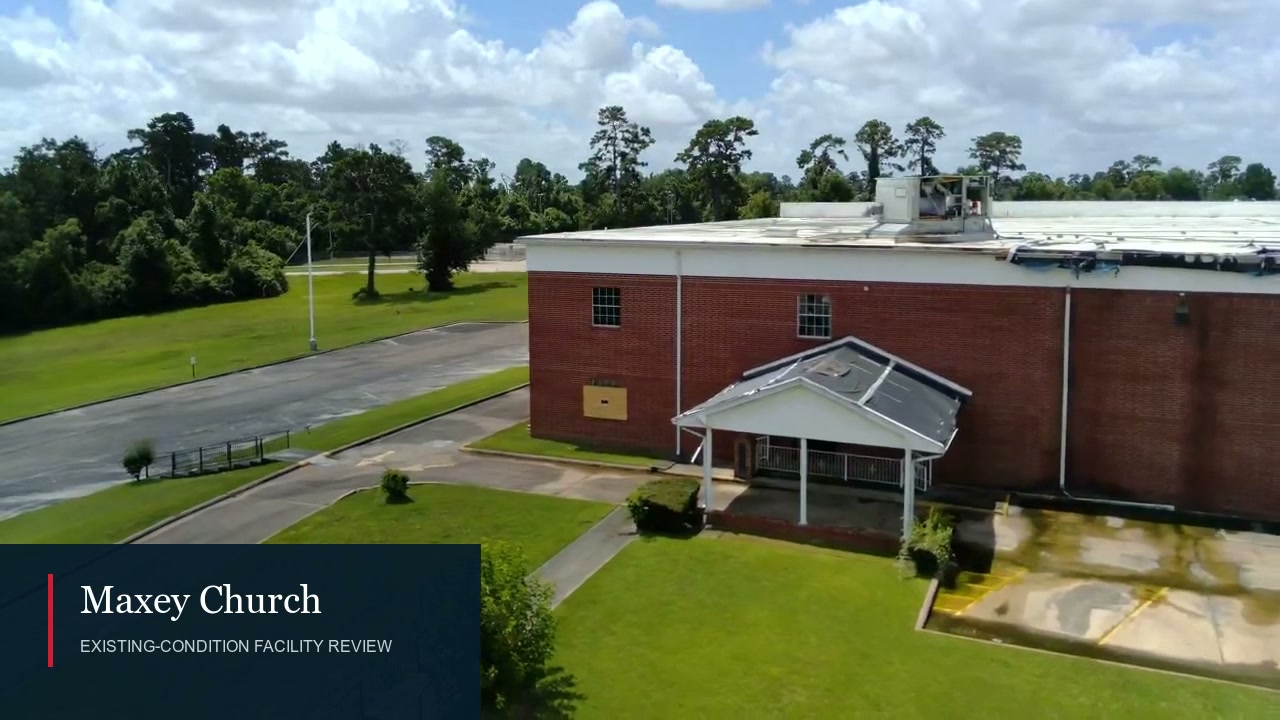
An assessment video should answer a practical question: what does the team know about the building before the repair scope is written? The verified Maxey Church footage includes aerial and interior views that document the roof, building footprint, and visible interior conditions during a facility review.
It is not a completion reel. KIBA presents it as an existing-condition record because that is what the media proves.
Begin with enough context to locate the condition
A close detail has limited value when the reviewer cannot place it on the building. The opening views should establish the site, main elevations, roof areas, entries, and other reference points that help the owner and contractor discuss the same location.
Aerial footage can be useful for this orientation. It can show roof geometry, transitions, equipment locations, drainage patterns visible from above, and the relationship between building areas. It cannot replace appropriate access or a qualified hands-on review.
Every clip should carry a simple label: front elevation, rear roof area, sanctuary, corridor, equipment room, or another stable location. That label should match the written condition log.
Separate an observation from a diagnosis
The camera may show staining, displaced material, surface wear, ponding, damaged finishes, or another visible condition. State the observation in plain language. Do not turn it into a diagnosis unless the project record contains the supporting review.
A useful assessment entry includes:
- The location shown
- The visible condition
- Access or view limitations
- Additional information needed
- The next responsible review
- Whether repair is authorized, requested for pricing, or still undecided
This gives the owner a path forward without presenting early footage as a complete repair specification.
Connect exterior and interior evidence carefully
Exterior and interior views can support the same investigation, but visual proximity does not prove causation. If the footage shows a roof area and an interior condition below, the record may identify them as areas for coordinated review. It should not state that one caused the other without the appropriate investigation.
Use the building plan, room labels, measurements, and additional field review to connect the records. When drawings are unavailable, a simple annotated area map can keep the discussion organized.
Edit for understanding, not constant motion
A useful facility video needs more than quick cuts. Hold each important view long enough for the reviewer to understand it. Alternate wide context, medium location, and detail. Use restrained labels, a clear route through the building, and captions for conditions that need follow-up.
Music and movement can support the pace, but they should not obscure the evidence. A project highlight reel and an assessment record serve different audiences. The highlight reel builds awareness; the assessment edit helps an owner make scope decisions.
End with open decisions
The assessment should close with a short list of what happens next. That can include closer roof access, measurements, trade review, owner records, material investigation, pricing requests, access coordination, or confirmation of the spaces that must remain operational.
Churches and small commercial properties may have services, programs, staff access, deliveries, or events that affect the next visit. Those operating constraints should enter the repair sequence before mobilization.
Houston application
Houston facilities face real weather exposure and operational demands, but the scope still has to begin with the conditions at the specific property. KIBA uses the Maxey record to support a direct property conversation: what is visible, what remains unknown, who needs to review it, and what information is required before repair pricing or construction begins.
Review the verified Maxey assessment record or see KIBA’s small-commercial and church service.
Project record
What the verified archive shows.
Each image is tied to the named project folder and described only at the stage visible in the record.
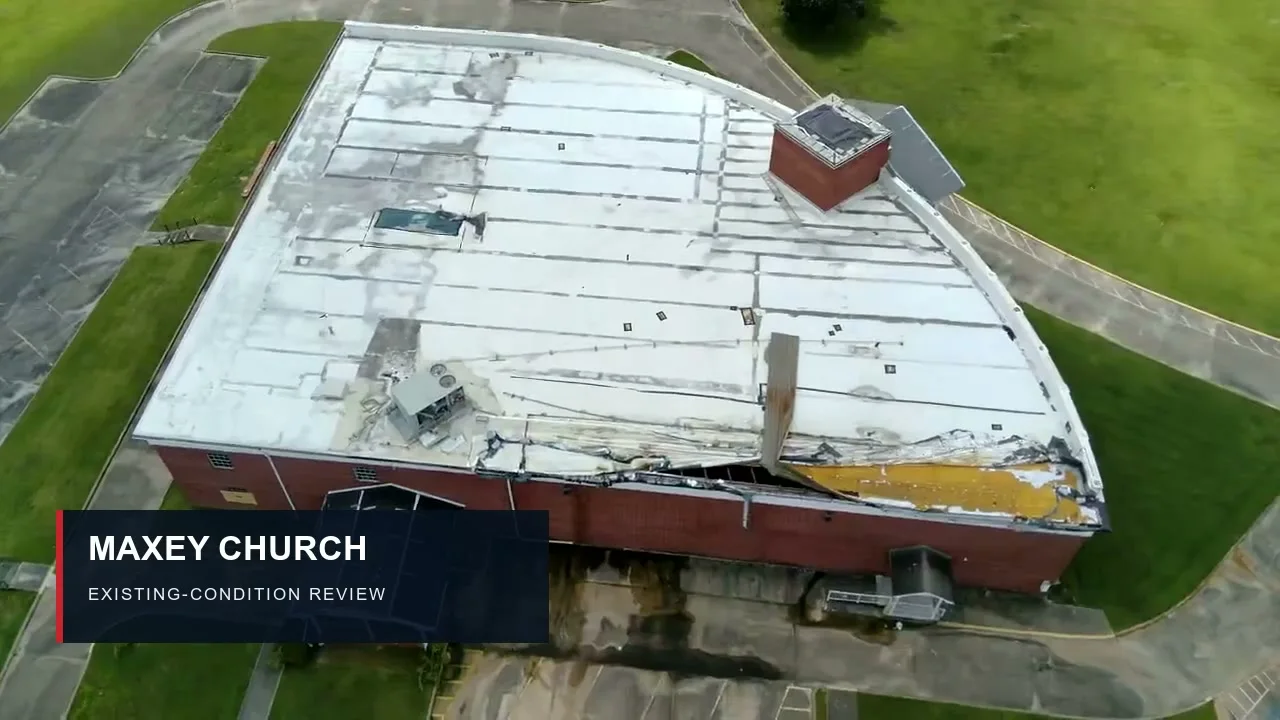
Aerial frame documenting existing roof conditions during the Maxey facility assessment.
Related KIBA work
Continue into the project record.
Houston marketMaxey Church Facility AssessmentExisting-condition review
Questions owners ask
Frequently asked questions.
Is Maxey presented as completed KIBA construction?
No. The verified media documents an existing-condition facility assessment and supports the next scope conversation.
Can aerial footage diagnose a roof problem?
No. It can document visible context and help identify areas for closer review. Diagnosis and repair recommendations require the appropriate access and qualified evaluation.
Why combine aerial and interior footage?
The two perspectives help connect the building footprint and roof context to the spaces and conditions observed inside without claiming more than the footage shows.
Bring us the property